Aug. 24, 2026
Electrification is sweeping through the global construction equipment industry. Electric mini excavators and electric skid steer loaders are moving quickly into zero-emission applications such as municipal work, landscaping, and indoor renovation. Yet battery range remains the core bottleneck holding back wider adoption. The real question is not whether an electric machine can work a full day, but how to make limited battery capacity deliver stable, all-day operation.
The answer is already here. Range is extended through four coordinated levers:
- Actualizaciones del sistema de batería. — more usable capacity, not just a bigger pack.
- Gestión térmica y energética. — spend every kWh where it counts.
- Recuperación de energía — reclaim range from braking and digging.
- Carga rápida y estrategia operativa. — recharge speed defines the work boundary.
This guide breaks down each one and shows where Yuchai's electric mini excavators and electric skid steer loaders apply them in practice.
Table of Contents
Battery System Upgrades: From More Capacity to Better Utilization
Thermal Management & Energy Optimization: Spend Every kWh Where It Counts
Energy Recovery: Reclaiming Range from Braking and Digging
Fast Charging & Operational Strategy: Recharge Speed Defines the Work Boundary
Which Yuchai Electric Machines Apply These Technologies?
FAQ
The Bottom Line
The first step to longer range is, naturally, a better battery. But simply stacking capacity is only a means — precise management is what turns rated capacity into range you can actually use.
Lithium iron phosphate (LFP) cells offer a strong safety profile and long cycle life, and higher-energy-density LFP chemistry lets you maximize stored energy within the same volume and weight envelope. A standardized, modular series-parallel layout reduces redundant system losses and makes the pack easier to service and scale across a machine family.
A larger pack is worthless if the cells drift apart. Upgrading the battery management system (BMS) with high-precision data acquisition and active balancing keeps cell consistency high and prevents capacity waste caused by imbalance. The goal is simple: convert the battery's nominal capacity into usable capacity, cycle after cycle. Do not judge a battery by its headline kWh alone — ask how much of it reaches the ground.
Cold is the number-one killer of electric equipment range. Below roughly −10 °C, LFP capacity can drop by more than 30%. Range stability across the full temperature range depends on managing heat as carefully as managing charge.
A combined PTC heating, aerogel insulation, and liquid-cooling thermal system is the core defense for all-climate range. Heating protects the pack in winter; insulation slows heat loss; liquid cooling keeps cells in their efficient window during heavy work. Together they keep the battery operating where it is strongest, instead of limping through temperature extremes.
Optimizing the control algorithm matters as much as the hardware. Matching high-efficiency permanent-magnet synchronous motors and developing CAN-bus real-time coordinated control between the electric drivetrain and hydraulics shortens power-response time while cutting wasted energy. The machine reacts faster and spends less electricity getting there.
El sistema hidráulico es donde se esconden muchas pérdidas "invisibles". especificando energy-saving hydraulic pumps and valves reduces energy loss at the source, working with the electric system to lower whole-machine consumption. Every kWh should reach the work — not dissipate into the plumbing.
A digging cycle throws away a surprising amount of recoverable energy. Braking, deceleration, and boom lowering all shed energy as heat — energy that is really a deposit waiting to be made.
By optimizing braking-energy recovery and dynamically adjusting recovery strength to the job scenario, then converting the potential energy of a descending boom back into electricity through motor reversal and recharging it into the LFP pack, operators can recover 10% to 15% of range that would otherwise be lost.
Where Yuchai applies this: Yuchai equips its electric skid steer loaders and electric mini excavators with coordinated energy-recovery control as a standard feature. By precisely matching recovered energy to the battery's charge and discharge profile, the system avoids stressing the pack while still capturing the energy efficiently — directly easing the battery-range pressure on a working day.
Range is not only about how far you go — it is about how fast you come back.
A 1C fast-charge solution paired with liquid-cooled thermal reinforcement can take the battery from empty to 80% in roughly one hour. Esa única capacidad convierte una "máquina de un turno" en una "candidata para dos turnos".
A dual DC-fast / AC-slow interface is what makes charging flexible on real sites. It is compatible with mobile charging trucks and portable chargers, so crews can top up during work breaks and perform centralized overnight charging. From the replenishment side, that extends effective daily operating hours without a bigger battery.
Important: Always follow the manufacturer's specified charging procedure, rated current, and ambient conditions, and comply with local electrical and worksite charging regulations. Fast charging is safe only within the battery and charger's verified envelope.
The right Yuchai model depends on the job you perform most often:
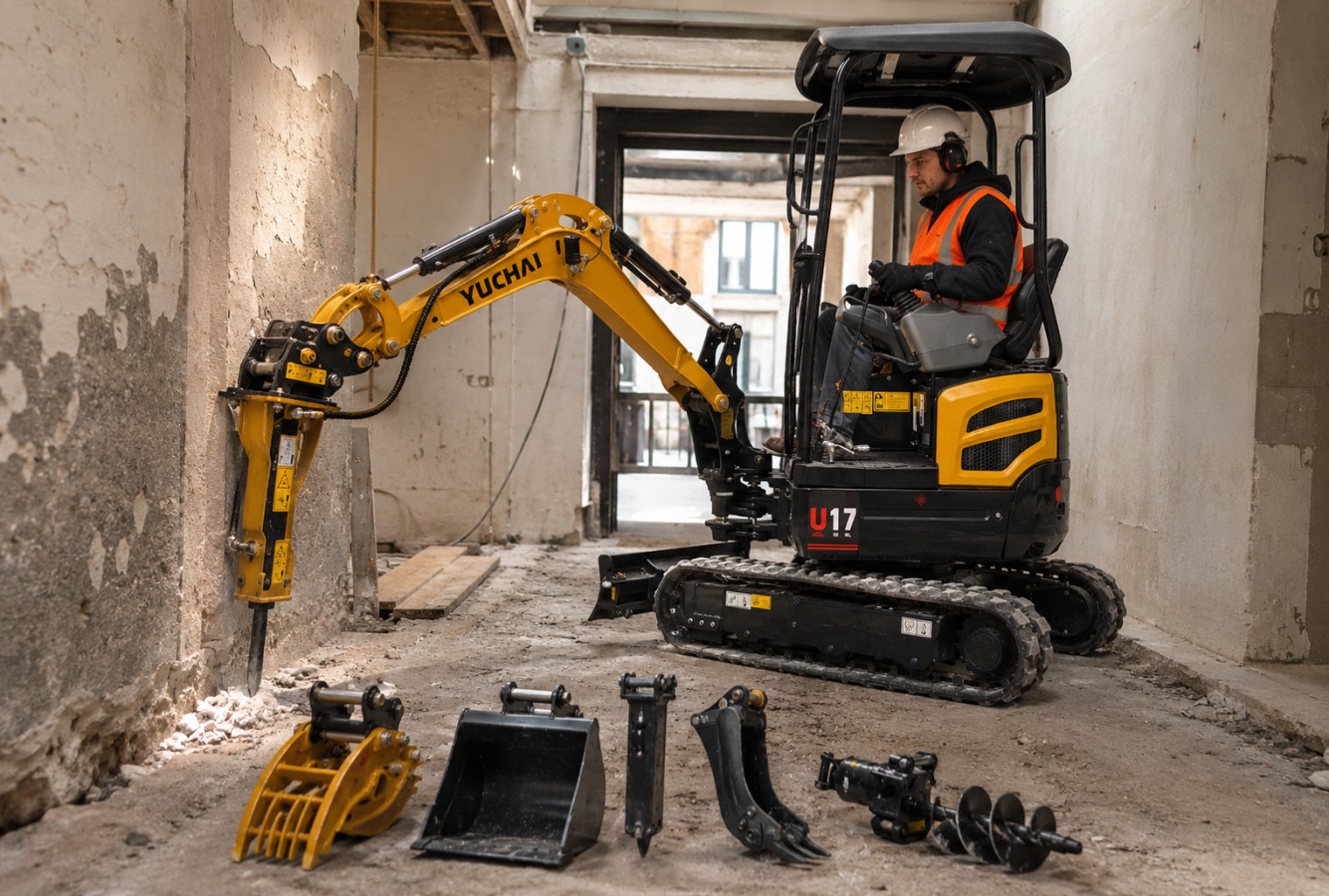
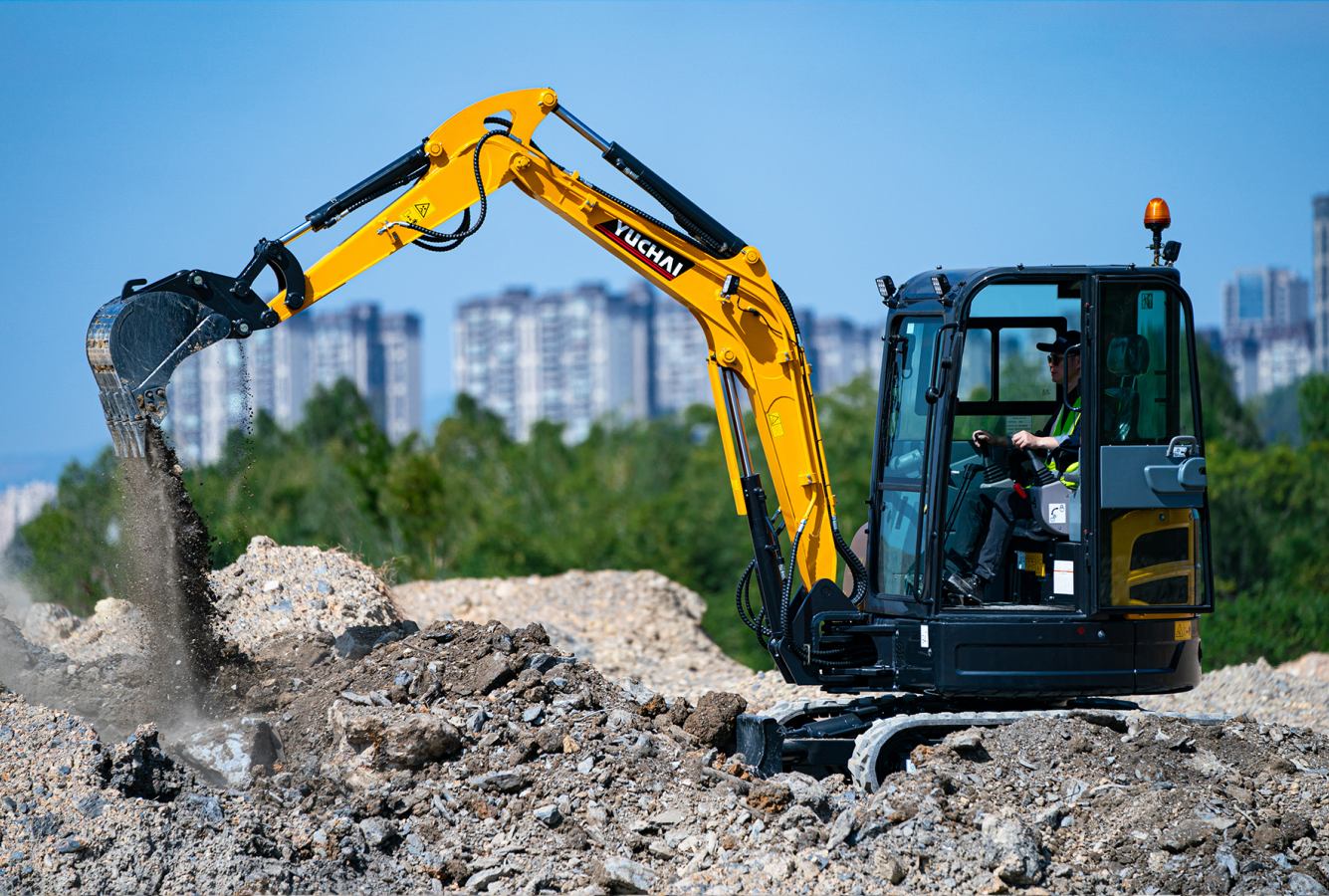
- Yuchai Y20E (miniexcavadora eléctrica de 2 toneladas) and Yuchai Y60E (6-ton class electric excavator) carry these battery, thermal, and recovery strategies into compact excavation — strong fits for indoor renovation, municipal trenching, and noise- or emission-restricted sites.
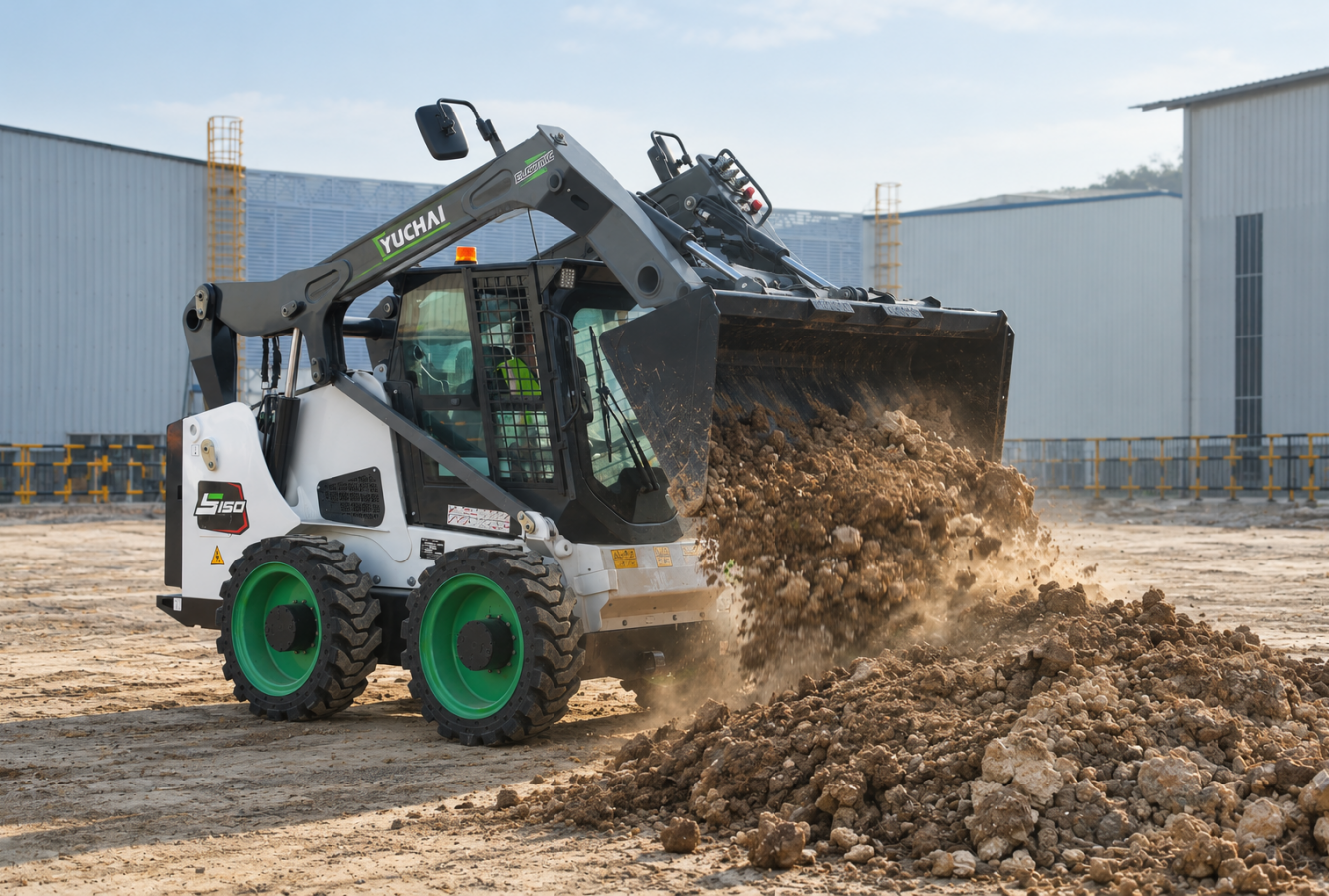
- Minicargadoras eléctricas: S35 Pro, S35 Max, S90 y S150 — extend the same zero-emission approach to grading, material handling, and attachment-heavy work, with energy recovery as standard.
- Cargadora de ruedas eléctrica YC-Z25 and the D170 electric remote-controlled demolition robot broaden the zero-emission lineup into loading and hazardous demolition tasks.
Browse the full Yuchai electric equipment range only after you have defined your daily hours, site access, and charging setup. Let the job select the machine — not the other way around.
Below about −10 °C, LFP battery capacity can fall by more than 30%. A combined heating, insulation, and liquid-cooling thermal system is what keeps range stable across the full temperature range.
Yes. Recovering energy from braking, deceleration, and boom descent typically returns 10% to 15% of range that would otherwise be lost as heat. Yuchai fits coordinated energy recovery as standard on its electric mini excavators and electric skid steers.
With a 1C liquid-cooled fast-charge setup, the pack reaches about 80% in roughly one hour. A DC-fast / AC-slow dual interface lets crews charge from mobile trucks during breaks and centrally overnight.
Yuchai's electric skid steer loaders (S35 Pro, S35 Max, S90, S150) and electric mini excavators (Y20E, Y60E) include coordinated energy-recovery control as a standard feature.
Often, yes — when range is treated as a system: the right battery utilization, thermal management, energy recovery, and a gap-charging operational plan together turn a limited pack into a full working day.
Electric mini excavators do not need a miracle battery to work all day — they need the four levers above working together. As LFP chemistry, electronic control, and charging infrastructure keep maturing, the range performance of electric compact equipment will take another leap, pulling the entire category fully into the electric era.
For most contractors, the strongest starting point is to stop thinking about range as a single number and start managing it as a system: better utilization, smarter thermal control, recovered energy, and flexible charging. That approach avoids both underpowered electric machines and oversized packs you pay for but never use.
Explore Yuchai's electric mini excavators and electric skid steer loaders , or contact our team to match a model to your job site.
RNLATEST Tecnología

Aug. 24, 2026
Aug. 07, 2026
Aug. 07, 2026
Jul. 02, 2026
Proceso de fabricación de miniexcavadoras: cómo Yuchai construye miniexcavadoras de alta calidad
Jul. 02, 2026
Apr. 09, 2026
Excavadoras compactas Yuchai en todo el mundo